Life Is Shifting Fast- Key Shifts Shaping How We Live In 2026/27
Top 10 Remote Work Trends That Are Changing Your Modern Workplace Through 2026/27The way that people work has been drastically altered in recent years than in the previous several decades. Work arrangements that are hybrid and remote have gone from a temporary solution to permanent arrangements and the ripple effects are still evident across businesses career paths, cities, as well as professions. For some, the shift has been a great relief. Others, it has created real concerns about productivity, culture, and progression. It is evident that there's no way to go back to the past default. Here are 10 trends in remote work that are transforming our workplace in 2026/27.
1. Hybrid-based Work Develops into The Main Model
The debate over fully remote over fully on-site has settled into a reasonable middle the ground. Hybrid working, which allows employees to have a split between their home and an office space has been the most popular model in all knowledge-based industries. The details vary greatly from a structured two or three day office hours to highly flexible and flexible arrangements designed around work needs of teams. What many companies have recognized is that strict five-day schedules for office work are becoming difficult to justify to employees who have proven their ability to produce results at any time.
2. Asynchronous Communication Takes Priority
As teams become more geographically distributed and time zones get more diverse, the assumption that everyone needs to be on the same page simultaneously is becoming less and less true. Asynchronous communication, in which messages such as updates, messages, and decision-making are documented and then responded to in each person's own time becomes an important top priority for the organization rather than something to be considered as a secondary consideration. Tools that support async workflows are gaining ground, and the shift in mindset towards trusting people to handle their own time rather then tracking their online activity is beginning to gain momentum.
3. AI-powered productivity tools transform daily Work
The incorporation of AI in the everyday workplace tools has been faster than had. From meeting summaries to automated task management, to AI writing assistants and intelligent scheduling. The new toolkit for remote workers in 2026/27 will be vastly different than it did two years ago. The most important change cannot be traced to a single software rather the broader effect of AI managing the administrative aspects of work, allowing people to concentrate more on matters that actually require human judgment and imagination.
4. This is how the Home Office Becomes A Serious Investment
A decade into the widespread use of remote working that has resulted in the creation of a kitchen table configuration is giving way to more purpose-built office spaces. Workers and employers alike have begun to view the home work environment as an asset worth investing in. Ergonomic furniture, professional illumination, sound panels and high-end audio and video equipment are increasingly standard rather than high-end. Some employers are now offering dedicated for-home office benefits as part the benefits packages they offer realizing that a well-equipped remote worker is an effective one.
5. Digital Nomadism Gains Mainstream Legitimacy
What was once a way of life for freelancers and the self-employed is becoming a accepted working method for employees of established organizations. An increasing number of employers offer policies that allow for flexibility in location. allow employees to work from multiple countries for prolonged time frames, provided that tax and conformity requirements are completed. The infrastructure supporting this way of life such as co-working communities to nomad visa programs offered by an many countries, continues to grow and mature.
6. Remote Work Culture calls for thoughtful Design
One of the biggest issues that arise from distributed working is maintaining a cohesive community culture in which employees seldom or never interact physically. Leading companies are recognizing that a culture in remote settings does not happen naturally. It must be designed. This includes intentional onboarding processes regularly scheduled touchpoints, virtual social events, and specific frameworks for recognition as well as advancement. Employers who view culture as something that only occurs in the workplace are continually losing time in both retention and engagement.
7. Cybersecurity for remote workers is tightens Significantly
The increase in remote work drastically increased the threat surface that cybercriminals have access to, and responses from businesses have been quite significant. Zero-trust security solutions, mandatory VPN usage, monitoring of endpoints and multi-factor authentication are routine requirements rather that advanced security measures. Employee security training has become an ongoing requirement rather than just a once-off exercise for induction an indication of the fact remote workers working outside of the perimeters of corporate networks are vulnerabilities and an initial defense.
8. The Four-Day Work Week Gains Traction
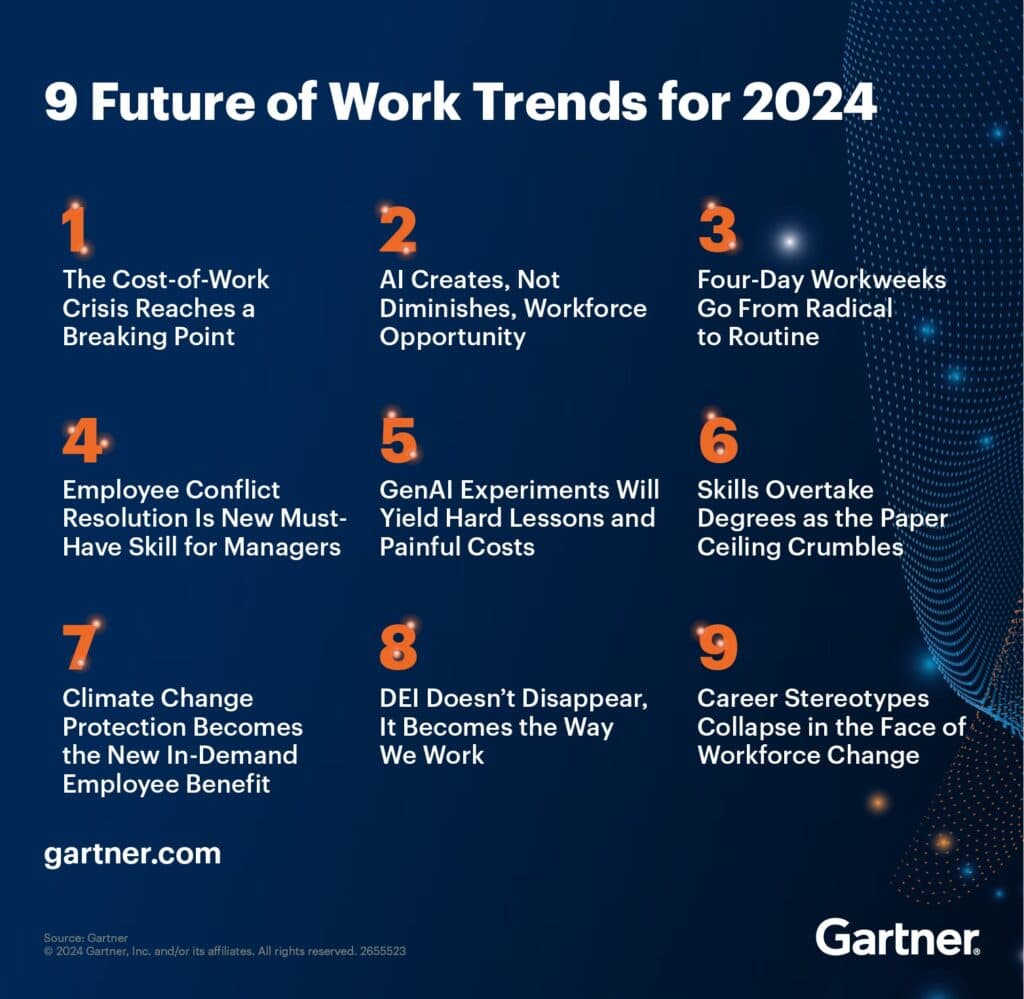
Pilot programs that test a four-day week of work have consistently produced good results across a variety of industries and countries, and many organizations are moving from trial to full-time adoption. The fundamental argument, the importance of focus and output more than hours of work, is in line with the remote working concept. In the race for workers in a marketplace which flexibility is a major need, the four-day weekend is evolving from a radical trial into a reliable way to differentiate.
9. Performance Measurement shifts to Outcomes
Managing remote teams by observing their activities, logging login times and monitoring screen usage has proven both non-effective and damaging to trust. The shift towards outcome-based performance management, in which employees are rated on the performance they deliver rather than how they appear to be busy it is one of the more significant cultural changes remote work has taken off. This calls for clearer goals to set, more frequent check-ins, and managers who can manage without directly supervised. It also demands greater accountability from employees in return.
10. The Mental Health And Boundaries Become Organisational Responsibilities
The blurring of work and personal and the stress that remote work can cause has brought the issue of mental health and boundary-setting on the organizational agenda. Burnout or isolation, as well as constant work habits are recognized as risks rather than personal failings, and employers are being expected to address them through a systemic approach. Regulations on working hours the right to disconnect expectation, access to mental health aids, as well as effective manager training are getting standardised as elements of what a responsible remote-friendly company is expected to look like in 2026/27.
The process of change at work can be ongoing and inconsistent, with different industries, roles and individuals undergoing it in different ways. What these trends have in common is a shared direction: toward greater flexibility, carefully planned communication, and fundamental rethinking of what is in order to achieve success. Organizations that actively engage in that process of rethinking are building workplaces that will be a pleasure to work for. To find further info, visit these respected To find further context, explore some of these reliable taustamedia.fi/ to find out more.
The 10 Fitness And Sports Changes Making Waves In The Years Ahead
The manner in which people approach sport exercising, fitness, and physical performance is changing faster than at almost any previous period. Technology is revolutionizing how the elite athletes train, compete as well as how regular people learn and manage their own fitness. Cultures' attitudes toward physical exercise are changing by expanding participation, removing traditional barriers, and introducing innovative forms of sport and physical activity that didn't exist just a few years ago. Be it a serious player, an occasional gym goer or just beginning to consider physical health it is clear that the landscape will be changing in 2026/27. Here are the top 10 sports and fitness trends that are dominating.
1. Wearable Technology Delivers Increasingly Sophisticated Information
The generation of wearable fitness technology which will be available in 2026/27 will go far beyond recording steps and monitoring heart rate. Continuous glucose monitoring blood oxygen saturation heart rate variability, skin temperature sleeping status and hydration structure are all being monitored using consumer-grade devices to a level of accuracy previously only accessible in clinical or elite performance settings. The challenge has shifted from recording data to interpreting it meaningfully, and the platforms built on wearables have been investing heavily in AI-driven analyses that convert vital physiological data into practical guidance for ordinary users instead of just numbers that require specialist interpretation.
2. Recovery is as important as Training
The recognition that adaptation to training occurs during recovery rather than during training it has transformed recovery from being a sideline to a fundamental element for fitness and health culture. Sleep optimisation, active recovery procedures, cold therapy and saunas that expose you to heat as well as compression technology, massage guns, and nutritional strategies designed to support recovery are all part of the mainstream in place of specialist concerns. Elite sport has long realised this, but the tools for knowledge, understanding, and permission to prioritise recovery have been gaining acceptance by recreational athletes and general fitness enthusiasts. This is part of a wider movement away from the "more is more" attitude to training, towards more accurate calibration of your stress and recovery.
3. Functional Fitness can displace pure aesthetic Objectives
The primary motive for exercise has been the appearance of a body that looks a particular way. The shift is taking place towards functional fitness, training that prioritises what the body can do rather than the way it appears. For everyday living, strength, flexibility, balance, cardiovascular resilience, and the ability for a physical endurance that lasts into old age are increasing in importance as the primary fitness motivations. This is the result of an ageing population that is taking more deeply about longevity and longevity, and also a reflection on what training is actually used for. Training methodologies built around motion quality, compound power, and metabolic conditioning are the primary beneficiaries.
4. Training and fitness for mental health are becoming more and more interconnected
The research evidence that links regular physical activity with improved psychological health outcomes has grown enough solid that exercise is currently being discussed in clinical contexts as a genuine therapeutic approach to depression, stress and anxiety rather as a mere lifestyle suggestion. This is affecting how fitness is promoted, and also how people relate to their own fitness habits. The concept of movement as psychological health maintenance as well being a physical fitness maintenance strategy is taking over mainstream consciousness and changing how people interact with exercise. The relationship has changed from one connected to appearance to an exercise routine tied to overall health. Prescriptions for exercise from healthcare professionals is becoming more prevalent as a result.
5. Combat Sports Reach New Mainstream Audiences
Boxing, mixed martial arts, kickboxing, and newer methods like bare-knuckle wrestling are experiencing significant growth in audiences caused by social media, streaming platforms and the growth of crossover events bringing mainstream celebrity attention to combat sports. Beyond just watching, combat sports are growing rapidly with boxing fitness Brazilian Jiu-Jitsu, Muay Thai, and MMA training attracting large numbers of people who don't have goals to compete but find the blend of skill development physically conditioning, mental challenge appealing in ways that conventional gym training is not able to provide. The social and cultural environment around training in combat sports is proven to be the most effective way to keep people engaged within a fitness industry that is struggling with dropout.
6. Personalised Nutrition & Supplementation Gets Mainstream
The implementation of personalised methods of nutrition for athletes, designed to meet the needs of each individual's physiology training demands, recovery needs and health targets rather than relying on general population guidelines is moving from the realm of elite sports into the mainstream fitness culture. Dietary recommendations based on DNA, gut microbiome analysis as well as continuous glucose monitoring to assess individual metabolic responses to food, and AI-driven dietary plans are now available to regular fitness lovers. The supplement industry is evolving as well, with more sophisticated and evidence-based products replacing more speculative section which has always been prone to over-claiming.
7. Outdoor And Adventure Fitness Experiences Surge
Fitness and fitness classes face increasing competition with adventure and outdoor fitness experiences that offer an exercise challenge as well as exposure, novelty, and social interaction in ways indoor training has a difficult time replicating. Trail running, open water swim, outdoor climb gravel cycling, and even organized adventure races are all increasing exponentially. The appeal goes beyond their variety. Research into the specific psychological and physiological advantages of exercising in natural environments is building an argument that suggests the benefits of outdoor activity are those that indoor equivalents do not precisely do. Urban populations with a lack of access to nature are causing a demand to organize experiences that bring outdoors activities within reach.
8. Esports And physical Gaming Invert Traditional Boundaries
The relationship between digital gaming with physical activity is more complex than what the stereotype of sitting suggests. The athletes who play esports train with planned physical conditioning regimens designed for the type of reaction time, concentration, and stress management their competition demands, and the physical preparation required for elite sports performance is taken increasingly seriously. At the same time, physically active gaming styles, mixed reality fitness experiences, and gaming platforms are attracting people into physical activity who were not used conventional fitness. The lines between physical sports as well as mental sports and the digital world are beginning to be blurred and are increasing the number of people engaged in structured physical and cognitive exercise.
9. Women's Sports Continues to Gain Speed Progress
Women's sport is enjoying a sustained increased attendance, TV viewers, sponsorships, and culture that marks an actual shift in structural structure, rather than a short-term spike. Cricket, football, rugby basketball, athletics, and football are all seeing women's competitions enjoy the kind commercial interest and attention from the mainstream that was previously focused predominantly on men's sports. The pool of girls participating in organized sports is significantly higher than at any point before in the majority of developed markets, which could have implications for the pool of talent participants, participation rates, aswell as acceptance of women as serious athletes. The trends are positive even as significant gaps in funding, public coverage, or pay in comparison to the same competitions for men persist.
10. The Longevity & Healthspan of Life Drive A New Fitness Philosophy
One of the most significant changes in the fitness-related culture to 2026/27 involves the changing of the focus of fitness training to be based on lifespan and healthspan rather than short-term performance or appearance objectives. The research into the relationship with certain training modalities specifically, strength training and cardiovascular fitness, as well as long-term health outcomes including cognitive function, metabolic health bone density, mortality risk has influenced how people are thinking about what they're training to train for. Zone 2 cardiovascular exercise, that helps to build the aerobic base for metabolic health, and longevity, as well as continuous resistance training to preserve fitness and muscle mass through and through ageing, are attracting mainstream interest from people who are pondering how they'd like their physical ability to be when they reach 60, seventy, and beyond.
Fitness and sport in 2026/27 are a reflection of a society that is engaging with physical health in greater sophistication, with more personal and holistic ways than they have been in previous years. These trends share the same thread: a shift away from narrow, focused on appearance, short-term thinking towards more comprehensive and lasting perception of what it takes to be physically well. For those who want to get involved with that shift, the tools, knowledge and support available to aid them have never been better. To find more detail, visit some of these reliable actueelblik.be/ to find out more.